Puppy biting can turn even the cutest little dog into a daily source of frustration.
One minute your puppy is cuddling peacefully beside you. The next minute they are attacking your hands, chewing your clothes, biting your ankles, or turning playtime into chaos.
If you are searching for How To Train A Puppy Not To Bite, you are definitely not alone.
Almost every puppy owner experiences this stage.
The good news is that puppy biting is completely normal — and with the right training, it usually improves dramatically over time.
The key is understanding why puppies bite in the first place and teaching them better ways to interact with people.
Many frustrated dog owners accidentally make biting worse without realizing it. Harsh punishment, inconsistent reactions, or encouraging rough play can confuse puppies and increase bad habits.
In this guide, you will learn exactly How To Train A Puppy Not To Bite using safe, realistic, trainer-approved methods that build trust while reducing painful puppy nipping.
Why Puppies Bite So Much
Before learning How To Train A Puppy Not To Bite, it helps to understand why puppies bite constantly.
Puppies explore the world with their mouths.
Biting is completely normal puppy behavior and usually happens because of:
- Teething discomfort
- Excitement
- Playfulness
- Overtiredness
- Attention-seeking
- Lack of impulse control
- Natural curiosity
Puppies also learn bite inhibition during early play with littermates.
When one puppy bites too hard, the other puppy reacts and play stops temporarily. This teaches puppies how much pressure is acceptable.
Your goal is continuing this lesson in a safe and consistent way at home.
When Does Puppy Biting Usually Stop?
Many owners searching for How To Train A Puppy Not To Bite worry their puppy will always act this way.
Fortunately, most puppies naturally improve as they mature.
Biting usually starts decreasing around:
- 4 to 5 months
- After teething improves
- With consistent training
- As impulse control develops
However, some high-energy breeds may stay mouthier longer if they do not receive enough structure or training.
Consistency matters more than perfection.
Step 1: Never Encourage Rough Play
One of the biggest mistakes owners make is accidentally rewarding biting behavior.
Games like:
- Wrestling
- Hand chasing
- Rough teasing
- Fast hand movements
can teach puppies that biting humans is fun.
If you truly want to learn How To Train A Puppy Not To Bite, focus on calm, structured play instead.
Use toys during interaction instead of your hands.
This helps puppies learn what is appropriate to bite.
Step 2: Redirect Biting Onto Toys
Redirection is one of the most effective puppy training techniques.
Whenever your puppy starts biting your hands, clothes, or feet:
- Calmly stop interaction
- Redirect attention to a chew toy
- Praise your puppy for chewing the toy
Consistency is critical.
Over time, your puppy learns:
“Toys are for biting. Humans are not.”
Keep toys easily accessible throughout the house so you can redirect quickly.
Step 3: Use Reverse Timeouts
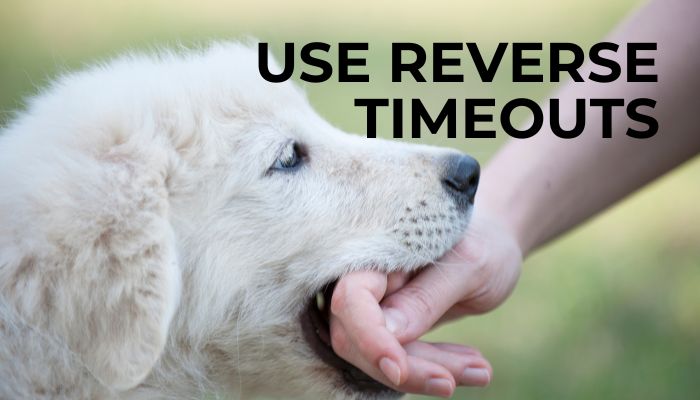
Many puppies bite because they want attention or play.
Reverse timeouts teach puppies that biting immediately ends fun interaction.
When biting happens:
- Calmly stand up
- Stop talking
- Walk away briefly
- Return after 20–30 seconds
Avoid yelling or physical punishment.
The goal is showing your puppy that rough behavior makes attention disappear.
This technique works especially well for excited puppies.
Step 4: Teach Calm Behavior
Many owners focus only on stopping bad behavior without teaching calm alternatives.
Puppies need guidance on what TO do.
Reward behaviors like:
- Sitting calmly
- Relaxing quietly
- Gentle interactions
- Lying down peacefully
Dogs repeat behaviors that get rewarded.
This is an important part of How To Train A Puppy Not To Bite long term.
Step 5: Puppies Need More Sleep Than You Think
Overtired puppies often become wild, hyper, and extremely bitey.
Many frustrated owners accidentally keep puppies overstimulated all day.
Most puppies need:
- 18–20 hours of sleep daily
- Quiet rest periods
- Structured nap schedules
If your puppy suddenly becomes a biting tornado in the evening, exhaustion may be the real issue.
Enforced naps can dramatically reduce biting behavior.
Step 6: Provide Safe Chewing Outlets
Teething puppies NEED to chew.
Without proper chewing options, your hands, shoes, furniture, and clothing become targets.
Helpful chew options include:
- Rubber chew toys
- Frozen teething toys
- Puppy-safe chews
- Rope toys
- Frozen washcloths
Many owners use healthy chew options from Pawstruck because long-lasting chews help redirect chewing behavior safely.
Providing appropriate chewing outlets is essential when learning How To Train A Puppy Not To Bite effectively.
Step 7: Mental Stimulation Reduces Biting
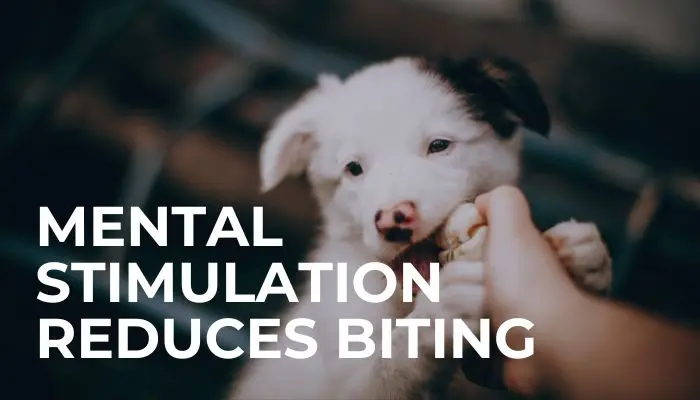
Under-stimulated puppies often become mouthier and more destructive.
Mental enrichment helps puppies burn energy in healthy ways.
Helpful activities include:
- Puzzle toys
- Scent games
- Training sessions
- Food puzzles
- Interactive toys
Short training sessions can mentally tire puppies faster than endless physical exercise.
Many owners combine enrichment with structured programs like Brain Training for Dogs to improve focus, impulse control, and calm behavior.
Mental stimulation is one of the most overlooked solutions for excessive puppy biting.
Step 8: Stay Consistent With Everyone In The House
Consistency is one of the most important parts of How To Train A Puppy Not To Bite.
If one person allows rough play while another discourages biting, puppies become confused.
Everyone in the household should follow the same rules:
- No rough hand play
- Redirect biting to toys
- Use calm reactions
- Reward gentle behavior
- Avoid physical punishment
Clear communication speeds up learning dramatically.
Step 9: Reward Gentle Mouth Behavior
Many puppies do not realize how hard they are biting.
Whenever your puppy interacts gently:
- Praise calmly
- Reward soft behavior
- Continue play appropriately
This teaches bite inhibition naturally.
Your puppy learns that gentle mouths keep fun interaction going.
 Why Punishment Often Makes Biting Worse
Many frustrated owners react emotionally when puppy biting hurts.
Unfortunately, punishment often increases excitement, fear, or confusion.
Avoid:
- Hitting
- Alpha rolls
- Yelling aggressively
- Holding mouths shut
- Flicking noses
Harsh corrections can damage trust and sometimes create defensive behavior later.
Modern puppy training focuses on teaching appropriate alternatives instead.
How Exercise Affects Puppy Biting
Many people assume puppies simply need more exercise.
While physical activity matters, overtired puppies often become MORE bitey.
Balance is important.
Healthy routines should include:
- Short walks
- Playtime
- Mental stimulation
- Structured naps
- Calm downtime
Overstimulated puppies struggle with impulse control.
This is why mentally engaging activities often work better than endless physical exercise alone.
Best Toys For Bitey Puppies
Some toys are especially helpful for puppies learning bite control.
Helpful options include:
- Frozen chew toys
- Rope toys
- Rubber enrichment toys
- Puzzle feeders
- Treat-dispensing toys
Many owners use Chewy to find puppy-safe enrichment toys and teething products that support healthy chewing habits.
Rotating toys regularly also helps prevent boredom.
Common Puppy Biting Mistakes
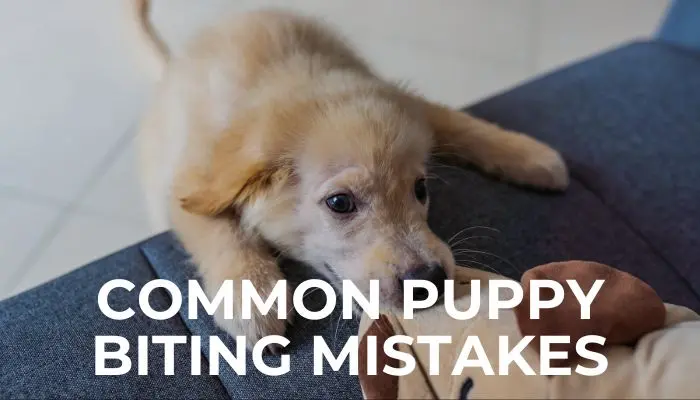
Even loving owners accidentally reinforce biting behavior.
Common mistakes include:
Pulling Hands Away Quickly
Fast movement can trigger chasing instincts.
Laughing During Biting
Some puppies interpret this as encouragement.
Allowing Rough Play Sometimes
Inconsistency confuses puppies.
Overstimulating Puppies
Excess excitement often increases biting.
Skipping Mental Stimulation
Bored puppies often become destructive and mouthy.
Understanding these mistakes is important when learning How To Train A Puppy Not To Bite successfully.
 Can Certain Breeds Bite More?
Yes.
Some breeds naturally use their mouths more because of genetics and working instincts.
Breeds commonly known for mouthy behavior include:
- Labrador Retrievers
- Golden Retrievers
- Border Collies
- Australian Shepherds
- German Shepherds
- Belgian Malinois
- Huskies
This does NOT mean these dogs are aggressive.
They simply require more structure, enrichment, and bite inhibition training.
How Long Does Puppy Bite Training Take?
Every puppy learns at a different pace.
Improvement depends on:
- Age
- Consistency
- Energy levels
- Breed tendencies
- Training quality
- Sleep routines
Most owners notice progress within a few weeks of consistent training.
The biggest improvements usually happen between 4–6 months.
Stay patient.
Puppy biting is temporary for most dogs.
Why Structure Helps Puppies Calm Down
Puppies thrive on routines.
Predictable schedules help reduce stress, hyperactivity, and overstimulation.
Healthy puppy routines include:
- Regular feeding times
- Scheduled naps
- Daily training
- Mental enrichment
- Calm rest periods
Dogs feel safer when life feels predictable.
Many owners stay organized using supplies from Pet Care Supplies to simplify daily puppy care and training routines.
Consistency creates calmer puppies.
Outdoor Training And Puppy Focus
Some puppies become extra mouthy outdoors due to overstimulation.
Loose leash training and structured walks help improve focus and impulse control.
Some owners also use tools like the Halo Collar to reinforce outdoor boundaries and structured training routines as puppies mature.
Clear communication helps puppies feel more secure overall.
Should You Worry About Aggression?
Most puppy biting is completely normal and NOT aggression.
Normal puppy biting usually looks like:
- Excited nipping
- Play biting
- Overstimulation
- Teething behavior
However, contact a professional trainer if your puppy shows:
- Intense growling
- Stiff body language
- Lunging
- Guarding behavior
- Fear-based aggression
- Repeated unprovoked biting
Early intervention is always best for serious behavior concerns.
Mental Enrichment Helps More Than Most Owners Realize
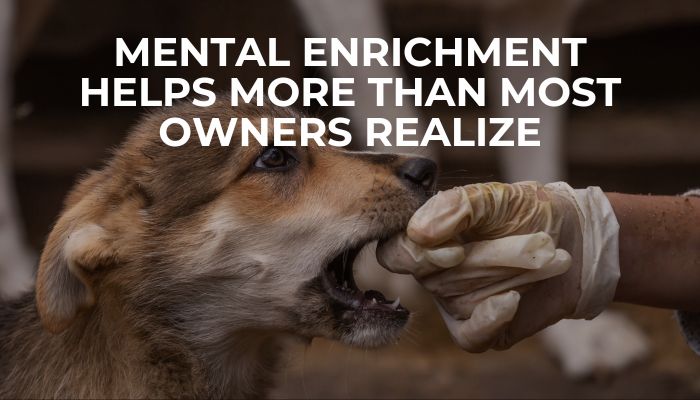
One of the fastest ways to improve puppy behavior is adding more mental stimulation.
Puppies that constantly feel bored often become:
- Mouthy
- Hyperactive
- Destructive
- Attention-seeking
Training games and puzzle activities help puppies learn how to focus calmly.
Programs like Brain Training for Dogs are popular with frustrated puppy owners because they combine mental stimulation with structured training exercises designed to improve listening skills and impulse control.
A mentally satisfied puppy is usually much easier to manage.
Puppy Biting Gets Better With Consistency
Raising a puppy can feel exhausting sometimes.
Puppy biting is frustrating, painful, and emotionally draining — especially when it feels nonstop.
But remember this:
Most puppies are not trying to be dominant, aggressive, or “bad.”
They are simply learning how to interact with the world.
Understanding How To Train A Puppy Not To Bite starts with patience, consistency, structure, and realistic expectations.
Focus on:
- Redirecting biting
- Rewarding calm behavior
- Providing chew outlets
- Avoiding punishment
- Building trust
- Creating healthy routines
Small daily improvements add up quickly.
If you want additional support for improving focus and behavior, many puppy owners use Brain Training for Dogs alongside positive reinforcement training and enrichment games.
With time, patience, and consistency, your bitey little puppy can absolutely grow into a calm and well-behaved companion.