
Leaving your dog home alone shouldn’t feel like a gamble.
Yet for many dog owners, every trip to work, the grocery store, or a dinner out comes with the same worries:
“Will my dog bark the entire time?”
“Will they destroy the furniture?”
“Will they have an accident?”
“Are they stressed because I’m gone?”
If this sounds familiar, you’re not alone. Many dogs struggle with being left by themselves, especially puppies, newly adopted dogs, or dogs that have become overly attached to their owners. Fortunately, learning how to train a dog to stay home alone is possible with patience, consistency, and the right approach.
The key isn’t forcing your dog to “get over it.” It’s gradually teaching them that being alone is safe, temporary, and nothing to fear.
In this guide, you’ll learn proven techniques to help your dog become comfortable staying home alone while avoiding common mistakes that can make separation anxiety even worse.
Why Some Dogs Struggle to Stay Home Alone
Dogs are naturally social animals.
In the wild, they live in groups, and even our domesticated companions are happiest when they’re around their family.
When suddenly left alone, some dogs experience stress that can lead to:
- Excessive barking
- Whining or howling
- Chewing furniture
- Scratching doors
- Digging at windows
- Indoor accidents
- Pacing
- Escape attempts
- Destructive behavior
Not every dog experiences full separation anxiety, but many simply haven’t learned that being alone is normal.
Fortunately, that’s a skill you can teach.
Step 1: Start with Very Short Absences
One of the biggest mistakes owners make is leaving a dog alone for several hours without any preparation.
Instead, start small.
Leave your house for:
- 30 seconds
- 1 minute
- 3 minutes
- 5 minutes
Return calmly before your dog becomes overly anxious.
Once your dog stays relaxed, slowly increase the amount of time you’re away.
Small wins build confidence.
Step 2: Create a Calm Departure Routine
Many owners accidentally increase anxiety by making leaving a dramatic event.
Avoid:
- Long emotional goodbyes
- Excessive hugging
- Saying “I’ll miss you!”
- Making your departure feel unusual
Instead:
- Stay calm.
- Grab your keys casually.
- Leave quietly.
- Return without making a huge celebration.
This teaches your dog that coming and going is simply part of everyday life.
Step 3: Give Your Dog Something to Do
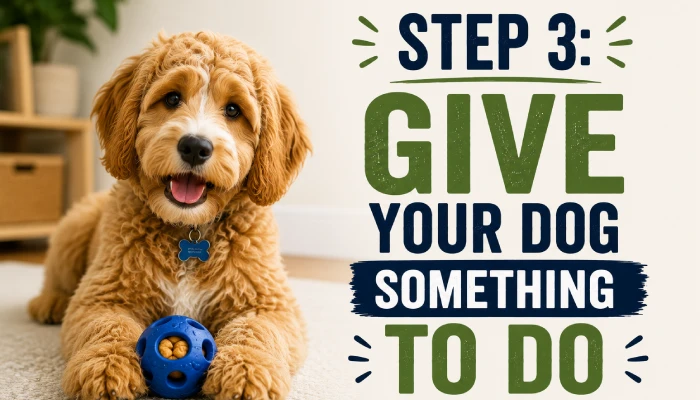
A bored dog often becomes an anxious dog.
Mental stimulation helps keep your dog’s mind occupied while you’re away.
Before leaving, provide:
- Puzzle toys
- Food-dispensing toys
- Safe chew toys
- Long-lasting treats
- Snuffle mats
Rotating toys every few days also helps keep them interesting.
If your dog spends time solving a problem instead of worrying about you, they’re more likely to relax.
A monthly subscription like BarkBox can help by providing new toys, enrichment activities, and engaging chew options that reduce boredom and encourage healthy mental stimulation.
Learn more here:
Step 4: Exercise Before You Leave
A tired dog is often a calmer dog.
Before leaving the house:
- Take a brisk walk
- Play fetch
- Practice obedience
- Enjoy a short training session
Physical exercise combined with mental stimulation helps your dog settle more easily once you’re gone.
For high-energy breeds, this step can make a huge difference.
Step 5: Build Independence While You're Home
Many dogs become overly dependent because they’re constantly following their owner from room to room.
Encourage small periods of independence by:
- Asking your dog to stay on their bed while you move around the house
- Closing a baby gate for a few minutes
- Spending short periods in another room
- Rewarding calm, independent behavior
Your dog learns that being separated—even while you’re still home—is completely normal.
Step 6: Reward Calm Behavior
Positive reinforcement speeds learning.
Whenever your dog remains calm before, during, or after short absences:
- Offer praise
- Give healthy treats
- Reward relaxed body language
Avoid rewarding anxious behavior.
Instead, reinforce the behavior you want to see.
Training treats from Pawstruck work well because they’re designed for frequent rewards during short training sessions without interrupting your dog’s routine.
Learn more here:
Pawstruck: https://dogcareandtraining.com/pawstruck
Step 7: Follow a Structured Training Plan 🐶
If your dog has developed barking, destructive behavior, panic, or severe separation anxiety, random tips from the internet often aren’t enough.
Real improvement comes from following a structured training system that teaches dogs how to relax, focus, and build confidence through gradual, positive exercises.
One of the most comprehensive programs available is Brain Training for Dogs.
The program teaches step-by-step games and training exercises that improve:
Focus
Confidence
Self-control
Listening skills
Calm behavior
Problem-solving abilities
Rather than relying on punishment, it helps owners understand how dogs learn and builds better habits over time.
You can learn more here:
Brain Training for Dogs https://dogcareandtraining.com/brain-training
Common Mistakes Dog Owners Make
Even with good intentions, some habits can slow your dog’s progress.
1. Leaving for Too Long Too Soon
If your dog panics after 15 minutes, leaving them alone for six hours won’t teach independence.
Gradually increase alone time instead.
2. Punishing Destructive Behavior
Coming home to chewed furniture is frustrating.
However, punishment after the fact only creates confusion because your dog doesn’t connect the correction with what happened hours earlier.
Focus on preventing the behavior and rewarding calm choices instead.
3. Ignoring Mental Stimulation
Many owners provide food and exercise but overlook mental enrichment.
Dogs need activities that challenge their brains just as much as their bodies.
Without them, boredom can quickly become destructive behavior.
Recommended Product: Brain Training for Dogs
If you’re serious about How To Train A Dog To Stay Home Alone calmly, Brain Training for Dogs is one of the best resources available.
Instead of offering quick fixes, the program provides a structured, science-based training system that helps owners address unwanted behaviors by understanding how dogs think and learn.
What Is It?
Brain Training for Dogs is an online dog training program filled with step-by-step lessons, games, and behavior exercises designed to improve obedience, confidence, and emotional control.
Who Created It?
The program was created by Adrienne Farricelli, a professional CPDT-KA certified dog trainer with years of experience helping owners solve common behavior problems using positive reinforcement methods.
Why It Helps
Dogs that struggle to stay home alone often lack confidence or haven’t learned how to relax independently.
The program addresses these underlying issues by teaching:
Calmness
Self-control
Better listening skills
Confidence-building exercises
Positive daily routines
Instead of simply treating the symptoms, it helps owners build long-lasting behavioral improvements.
Learn more here: https://dogcareandtraining.com/brain-training
Benefits of Brain Training for Dogs 💕
Some of the biggest advantages include:
- Easy-to-follow training lessons
- Positive reinforcement techniques
- Builds confidence gradually
- Helps reduce unwanted behaviors
- Improves focus and listening
- Suitable for puppies and adult dogs
- Can be done at home
- Encourages stronger owner-dog communication
- Supports long-term behavioral improvement
- Complements healthy daily routines
Frequently Asked Questions
How long can a dog stay home alone?
It depends on the dog’s age, health, and training. Puppies generally need more frequent bathroom breaks, while healthy adult dogs can often stay alone for several hours with proper preparation.
Is separation anxiety the same as boredom?
No. Boredom can lead to unwanted behavior, while separation anxiety is a more intense emotional response to being left alone. Some dogs may experience one or both.
Should I leave the TV or radio on?
Some dogs find background noise comforting, but it’s not a replacement for proper training. It may help reduce sudden noises and create a more familiar environment.
Can older dogs learn to stay home alone?
Yes. With patience, consistency, and positive reinforcement, dogs of almost any age can learn to become more comfortable spending time alone.
Conclusion
Learning how to train a dog to stay home alone isn’t about forcing your dog to cope—it’s about building confidence one small step at a time.
Remember to:
Start with short absences.
Keep departures calm.
Provide mental enrichment.
Exercise before leaving.
Encourage independence.
Reward calm behavior.
Follow a structured training plan.
With consistency, most dogs can learn that being home alone is safe and temporary.
If you’re ready to accelerate your dog’s progress, Brain Training for Dogs provides a proven, step-by-step system to build confidence, reduce unwanted behaviors, and create better lifelong habits.
👉 Learn more here: https://dogcareandtraining.com/brain-training
And for extra enrichment while you’re away, BarkBox can help keep your dog mentally stimulated with engaging toys and activities that reduce boredom.
👉 Explore BarkBox: https://dogcareandtraining.com/bark-box