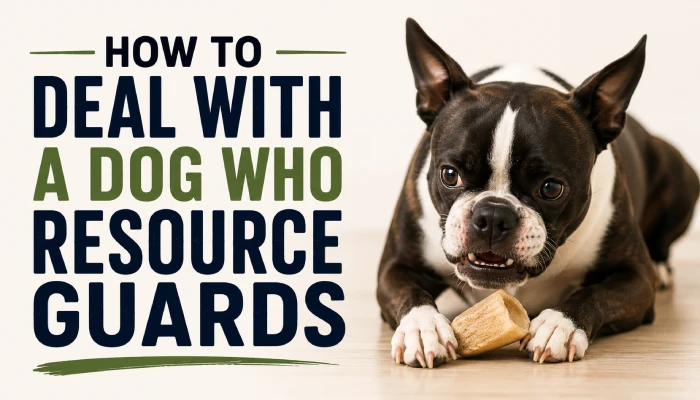
Does your dog growl when someone gets close to their food bowl? Snap when you try to take away a toy? Stiffen up over a favorite bed or treat?
If so, you’re dealing with resource guarding—a common behavior that can be alarming, especially if you’ve never seen it before.
The first thing to know is this: resource guarding doesn’t automatically mean your dog is aggressive or “bad.” In many cases, it’s a natural survival instinct. Dogs guard things they believe are valuable, whether that’s food, toys, sleeping areas, or even people.
If you’re wondering how to deal with a dog who resource guards, the good news is that this behavior can often be improved with patient, reward-based training. The goal isn’t to overpower your dog—it’s to teach them that people approaching valuable items leads to good things, not loss.
In this guide, you’ll learn why dogs resource guard, how to manage the behavior safely, common mistakes to avoid, and a structured training program that can help you build trust while reducing guarding behavior.
What Is Resource Guarding?
Resource guarding happens when a dog tries to protect something they value.
That “resource” could include:
- Food bowls
- Bones and chews
- Toys
- Treats
- Beds or crates
- Favorite resting spots
- Stolen household items
- Even certain people
Dogs may show different levels of guarding behavior, including:
- Freezing
- Stiff body posture
- Eating faster
- Whale eye (showing the whites of the eyes)
- Growling
- Snarling
- Snapping
- Biting
These behaviors are your dog’s way of saying, “Please don’t take this away.”
Recognizing these warning signs early allows you to respond safely before the situation escalates.
Why Do Dogs Resource Guard?
Understanding the cause makes it much easier to address the behavior.
Natural Survival Instinct
In the wild, protecting food and valuable resources increases survival.
Many dogs still carry this instinct, even when they have plenty to eat.
Past Experiences
Dogs that have experienced food scarcity, competition, neglect, or life in shelters may be more likely to guard valuable items.
Genetics
Some dogs naturally place a higher value on certain resources than others.
This doesn’t mean they can’t improve—it simply means training may require more patience.
Fear of Losing Something Valuable
Resource guarding is often driven by anxiety rather than dominance.
Your dog believes someone approaching means the item will disappear.
Training should focus on changing that expectation.
Step-by-Step Guide: How To Deal With A Dog Who Resource Guards
When learning how to deal with a dog who resource guards, safety should always come first.
Never rush the process or intentionally provoke guarding behavior.
🐶 Step 1: Identify Your Dog's Triggers
Observe what your dog guards.
Common triggers include:
- Meals
- High-value treats
- Bones
- Favorite toys
- Furniture
- Resting places
- Stolen objects
Knowing exactly what causes guarding helps you develop a consistent training plan.
Step 2: Stop Taking Things Away Unexpectedly
Many owners accidentally strengthen guarding by repeatedly grabbing items from their dog.
Instead, teach your dog that giving something up always results in something better.
This builds trust instead of conflict.
Step 3: Teach the "Trade" Game
One of the safest ways to reduce guarding is by trading.
Offer:
- A higher-value treat
- A favorite toy
- Praise
When your dog willingly releases the object, reward immediately.
Over time, your dog learns that giving things up leads to positive outcomes.
Treats from Pawstruck work well for trade exercises because they’re designed for training and rewarding desirable behavior.
Step 4: Create Positive Associations
Instead of reaching for your dog’s food bowl, simply walk past and toss a delicious treat into it.
Your dog begins to think:
“People coming near my food means something even better happens.”
Repeat this consistently without trying to remove the bowl.
Step 5: Teach Reliable Commands 🐶
Helpful commands include:
- Leave It
- Drop It
- Stay
- Come
- Place
These behaviors improve communication and reduce conflict in everyday situations.
A structured program like Brain Training for Dogs teaches these skills using reward-based methods that focus on cooperation rather than force.
Step 6: Manage the Environment
While training is in progress:
- Feed dogs separately if you have multiple pets.
- Pick up high-value items when guests visit.
- Supervise children around food and toys.
- Avoid situations that trigger guarding.
Management prevents unwanted rehearsals of the behavior.
Step 7: Seek Professional Help for Severe Cases
If your dog has bitten someone or shows intense guarding, work with a qualified positive reinforcement trainer or a veterinary behavior professional.
Safety should always be the priority.
Common Mistakes Dog Owners Make
Mistake #1: Punishing Growling
Growling is valuable communication.
If you punish the growl, your dog may stop warning before biting.
Instead of suppressing the warning, address the reason behind it.
Mistake #2: Trying to Prove You’re “The Boss”
Outdated training advice often encourages owners to forcefully remove food, pin dogs down, or challenge them.
These methods frequently increase fear and make guarding worse.
Modern training focuses on trust and positive reinforcement.
Mistake #3: Moving Too Quickly
Resource guarding improves gradually.
Trying to rush training by repeatedly testing your dog usually delays progress.
Work at your dog’s pace and celebrate small improvements.
Recommended Training Program
Knowing how to deal with a dog who resource guards involves more than teaching commands—it requires changing how your dog feels about people approaching valuable items.
One of the most comprehensive programs available is Brain Training for Dogs.
Created by certified professional dog trainer Adrienne Farricelli, the program uses science-based, force-free training methods to improve communication, impulse control, confidence, and problem-solving.
Rather than relying on punishment, it helps owners build trust while addressing unwanted behaviors in a structured, step-by-step way.
You can learn more here:
https://dogcareandtraining.com/brain-training
For ongoing rewards during training, Pawstruck treats make positive reinforcement easier by providing high-value rewards that many dogs find motivating.
Benefits of the Recommended Products 💕
Brain Training for Dogs
- Step-by-step reward-based training
- Improves impulse control
- Strengthens trust between dog and owner
- Builds reliable obedience skills
- Addresses common behavior challenges
- Suitable for dogs of different ages and breeds
Pawstruck
- Ideal for trade exercises
- Encourages positive reinforcement
- Easy to use during short training sessions
- Helps reinforce calm, cooperative behavior
Pet Care Supplies
Daily routines become easier when you have the right essentials for feeding, enrichment, and training.
Explore useful supplies here: https://dogcareandtraining.com/pet-care-supplies
Benefits include:
- Supports consistent daily care
- Helps organize feeding and training routines
- Provides practical tools for long-term success
Ready to Help Your Dog Feel More Secure? 🐶
Resource guarding isn’t about winning a battle with your dog.
It’s about helping them feel safe enough that they no longer believe they need to protect valuable items.
With patience, consistent positive reinforcement, and structured training, many dogs make significant progress.
If you’d like a complete training system that teaches these principles in an easy-to-follow format, explore Brain Training for Dogs:
Frequently Asked Questions
Is resource guarding normal in dogs?
Yes. Resource guarding is a natural canine behavior, although the intensity varies from dog to dog. Mild guarding can often be improved through positive, consistent training.
Should I take my dog’s food away to teach them not to guard it?
No. Repeatedly taking food away can increase anxiety and make guarding worse. Instead, teach your dog that people approaching their food predict something even better, such as an extra treat.
Can resource guarding be cured?
Many dogs improve significantly with proper management and reward-based training. Some may always need thoughtful handling around high-value items, but the behavior can often become much safer and more manageable.
When should I contact a professional trainer?
Seek professional help if your dog has bitten someone, guards multiple resources intensely, or if you feel unsafe working through the behavior on your own.
Conclusion
Learning how to deal with a dog who resource guards starts with understanding why the behavior happens and using consistent, reward-based training to build trust.
Instead of relying on punishment or confrontation, focus on building trust through positive associations, trade games, consistent routines, and reward-based training.
By identifying your dog’s triggers, managing the environment, and teaching alternative behaviors, you can help your dog feel more secure and reduce guarding over time.
For owners looking for a proven roadmap, Brain Training for Dogs provides step-by-step guidance rooted in positive reinforcement, while Pawstruck treats make rewarding calm behavior simple and effective. Together, they can help you build a safer, more trusting relationship with your dog.
If you’ve been searching for how to deal with a dog who resource guards, remember that patience, consistency, and positive reinforcement are the keys to long-term success.