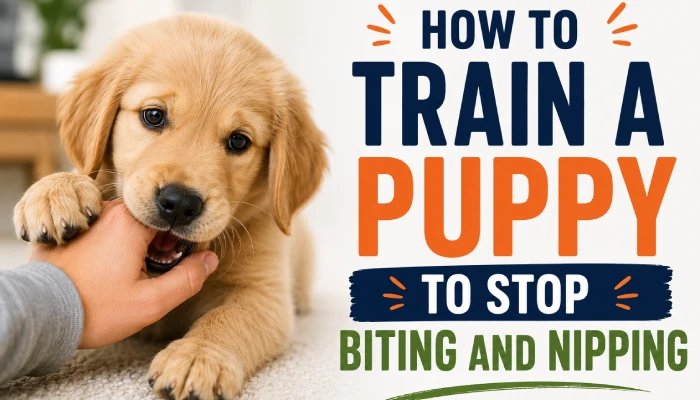
If you’ve recently brought home a puppy, you’ve probably experienced this familiar scene.
You’re playing together one moment, and the next, those tiny razor-sharp teeth are clamped onto your fingers, clothes, or ankles.
It can be frustrating—and sometimes painful.
The good news is that How To Train A Puppy To Stop Biting and Nipping and nipping are completely normal behaviors. Puppies use their mouths to explore the world, interact with people, and play with their littermates. The challenge isn’t stopping the behavior overnight; it’s teaching your puppy what is and isn’t acceptable.
With patience, consistency, and the right training methods, you can raise a puppy that grows into a gentle, well-mannered adult dog.
In this guide on How To Train A Puppy To Stop Biting and Nipping, you’ll learn why puppies bite, how to stop the behavior using positive reinforcement, common mistakes to avoid, and a proven training program that makes the process much easier.
Why Do Puppies Bite and Nip?
Before trying to fix the problem, it’s important to understand why it happens.
How To Train A Puppy To Stop Biting and Nipping isn’t usually aggression. In most cases, it’s simply part of healthy development.
Exploring the World
Just like babies use their hands, puppies use their mouths.
Everything is new, and biting helps them learn about textures, objects, and people.
Teething Pain
Between a few weeks and several months of age, puppies go through teething.
Chewing helps relieve discomfort as their adult teeth come in.
Play Behavior
Puppies naturally wrestle and bite while playing with their littermates.
When another puppy bites too hard, the play stops. That’s how puppies learn “bite inhibition”—controlling the strength of their bite.
When they come home with you, it’s your job to continue teaching that lesson.
Too Much Energy
An overtired or under-exercised puppy often becomes extra mouthy.
Zoomies, excessive biting, and jumping frequently happen when puppies have too much energy or need a nap.
Seeking Attention
If biting always gets your attention—even if you’re saying “No!”—your puppy may see it as a successful way to start a game.
Step-by-Step Guide: How To Train A Puppy To Stop Biting and Nipping
These proven steps will help your puppy develop better habits while strengthening your relationship.
🐶 Step 1: Stay Calm and Avoid Punishment
Yelling or hitting your puppy won’t teach them what to do.
Instead, it often creates fear or excitement, making the behavior worse.
When your puppy bites:
- Stay calm.
- Stop moving your hands.
- End the interaction briefly.
- Redirect them to an appropriate toy.
Consistency matters far more than intensity.
Step 2: Redirect the Bite
Always have chew toys nearby.
The moment your puppy bites your hands, calmly offer:
- A rubber chew toy
- A rope toy
- A puppy-safe teething toy
- A durable chew
This teaches your puppy what they’re allowed to bite instead of people.
Step 3: Teach Bite Inhibition
If your puppy bites too hard during play:
- Say “Ouch!” in a calm but clear voice.
- Immediately stop interacting.
- Stand up and ignore your puppy for 20–30 seconds.
- Resume play once they’re calm.
Your puppy quickly learns that biting too hard makes the fun disappear.
Step 4: Reward Gentle Behavior
Dogs repeat behaviors that earn rewards.
Whenever your puppy:
- Licks instead of bites
- Plays gently
- Sits calmly
- Chooses a toy
Reward them with:
- Praise
- Small treats
- Playtime
- Affection
Training isn’t just about correcting mistakes—it’s about rewarding success.
Treats from Pawstruck make excellent training rewards because they’re designed for positive reinforcement and frequent practice.
Step 5: Increase Physical and Mental Exercise 🐶
Many puppies bite simply because they’re bored.
Daily routines should include:
- Walks (age-appropriate)
- Short training sessions
- Puzzle toys
- Sniffing games
- Interactive play
Mental exercise often tires puppies even faster than physical activity.
A monthly subscription like BarkBox provides new toys and enrichment activities that help reduce boredom and keep puppies engaged.
Step 6: Teach Basic Obedience
Simple commands help redirect your puppy before biting begins.
Start with:
- Sit
- Down
- Leave It
- Come
- Watch Me
Short, positive training sessions build focus and improve impulse control.
If you want a structured program that walks you through every stage of puppy training, Brain Training for Dogs provides step-by-step lessons that are easy for first-time owners to follow.
Step 7: Be Consistent With Everyone
Your puppy can’t learn if family members follow different rules.
Everyone in the household should:
- Respond the same way to biting.
- Reward gentle behavior.
- Avoid rough play.
- Use the same commands.
- Stay patient.
Consistency is what turns training into lifelong habits.
Common Mistakes Puppy Owners Make
Mistake #1: Using Your Hands as Toys
Many owners accidentally encourage biting by wrestling with their puppy using bare hands.
Instead, always use toys during play sessions.
This teaches your puppy that toys—not people—are for chewing.
Mistake #2: Expecting Instant Results
Puppy training takes time.
Your puppy is learning every single day.
Celebrate progress instead of expecting perfection.
Small improvements add up quickly when you’re consistent.
Mistake #3: Not Providing Enough Enrichment
A bored puppy will often invent activities—including biting furniture, shoes, or people.
Daily enrichment through games, training, and interactive toys helps prevent unwanted behaviors before they begin.
Recommended Training Program for How To Train A Puppy To Stop Biting and Nipping
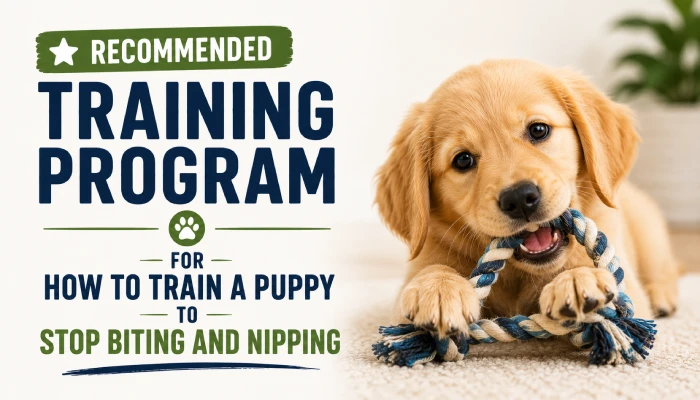
If you’re struggling to How To Train A Puppy To Stop Biting and Nipping despite your best efforts, following a structured training system can make the process much easier.
One of the most trusted programs available is Brain Training for Dogs.
Created by certified professional dog trainer Adrienne Farricelli, the program teaches dog owners how to communicate with their dogs using reward-based, science-backed methods. Instead of relying on punishment, it focuses on building self-control, confidence, and better decision-making.
The lessons are easy to follow and suitable for puppies as well as adult dogs with unwanted behaviors.
Learn more here: https://dogcareandtraining.com/brain-training
Benefits of the Recommended Products 💕
Brain Training for Dogs
- Step-by-step puppy training lessons
- Builds focus and impulse control
- Reduces unwanted biting and nipping
- Uses positive reinforcement techniques
- Easy for first-time dog owners
- Strengthens the bond between owner and puppy
Pawstruck Training Treats
- Great for rewarding good behavior
- Encourages faster learning
- Ideal size for frequent training
- Supports positive reinforcement
Learn more: https://dogcareandtraining.com/pawstruck
BarkBox
Keeps puppies mentally stimulated
Introduces new toys regularly
Reduces boredom-related behaviors
Encourages healthy chewing habits
Learn more: https://dogcareandtraining.com/bark-box
Ready to Help Your Puppy Stop Biting? 🐶
Puppy biting doesn’t last forever—but good training habits do.
By teaching bite inhibition, rewarding gentle behavior, providing plenty of enrichment, and staying consistent, you’ll help your puppy grow into a confident and polite companion.
If you’d like a complete, easy-to-follow training system, explore Brain Training for Dogs to guide you through every stage of puppy development.
Frequently Asked Questions
At what age do puppies stop biting?
Most puppies naturally reduce biting as they finish teething and learn bite inhibition. Consistent training helps speed up the process and encourages better habits.
Is puppy biting a sign of aggression?
No. In most cases, puppy biting is normal play, teething, or exploration. True aggression in young puppies is uncommon and usually involves additional warning signs.
Should I punish my puppy for biting?
No. Harsh punishment can create fear and damage trust. Positive reinforcement, redirection, and consistency are much more effective for teaching appropriate behavior.
What toys are best for puppies that bite?
Choose durable puppy-safe chew toys, rubber toys, rope toys, and teething toys designed for your puppy’s age and size. Rotating toys regularly also helps keep your puppy interested.
Conclusion
Learning how to train a puppy to stop biting and nipping isn’t about eliminating a natural behavior—it’s about teaching your puppy better choices.
Stay patient, redirect biting toward appropriate toys, reward calm behavior, provide plenty of physical and mental stimulation, and remain consistent with your training.
For owners who want a clear roadmap, Brain Training for Dogs offers practical, reward-based lessons that simplify puppy training and help prevent common behavior problems before they become lifelong habits.
Combined with healthy rewards from Pawstruck and engaging enrichment through BarkBox, you’ll have everything you need to raise a happy, confident, and well-behaved puppy.