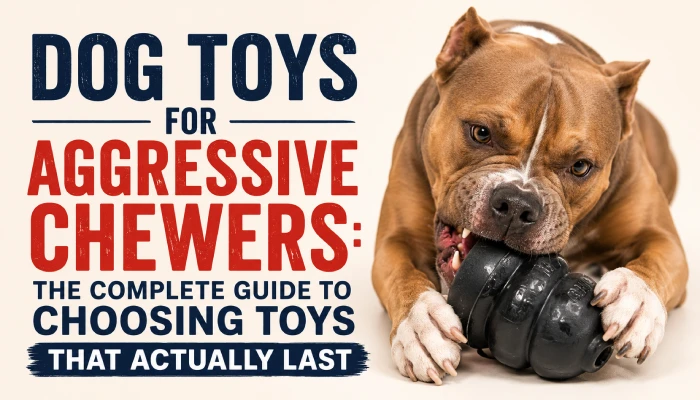
If you’ve spent a small fortune replacing shredded dog toys, you’re not alone.
One minute your dog is happily chewing away. Ten minutes later, the “indestructible” toy you bought is in pieces scattered across your living room. Sound familiar?
For owners of aggressive chewers, finding toys that survive longer than a few hours can feel impossible. Worse, destroyed toys can become a choking hazard, damage your furniture, and reinforce destructive chewing habits.
Here’s the good news.
Aggressive chewing isn’t necessarily a bad thing. It’s natural. Dogs chew to relieve stress, fight boredom, clean their teeth, exercise their jaws, and satisfy powerful instincts. The real challenge isn’t stopping your dog from chewing—it’s giving them the right outlet.
In this guide, you’ll discover exactly how to choose the best dog toys for aggressive chewers, avoid costly mistakes, and help your dog develop healthier chewing habits that protect both your belongings and your dog’s wellbeing.
🐶 Why Some Dogs Are Aggressive Chewers
Before buying another toy, it’s worth understanding why your dog destroys them so quickly.
Aggressive chewing is often caused by:
- High energy levels
- Teething puppies
- Anxiety or stress
- Separation anxiety
- Boredom
- Natural breed tendencies (Pit Bulls, German Shepherds, Labradors, Boxers, Rottweilers, Huskies and many working breeds)
Many owners assume their dog is simply “bad.”
In reality, chewing is often your dog’s way of solving a problem.
When you address the cause—not just the symptom—you’ll usually see much better results.
Step 1: Choose Toys Made for Power Chewers
Not all dog toys are created equally.
Soft plush toys may be perfect for gentle dogs, but they’re usually destroyed within minutes by aggressive chewers.
Instead, look for:
- Heavy-duty natural rubber
- Tough nylon construction
- Reinforced rope toys
- Durable rubber balls
- Treat-dispensing puzzle toys
Avoid toys with:
- Small removable pieces
- Thin plastic
- Weak stitching
- Loose squeakers that can be swallowed
A durable toy costs more upfront but often saves money by lasting much longer.
Step 2: Match the Toy to Your Dog's Size
One of the biggest mistakes owners make is buying toys that are too small.
Small toys can:
- Break faster
- Become choking hazards
- Encourage swallowing large pieces
Always buy toys designed specifically for your dog’s weight and jaw strength.
Manufacturers usually provide recommended size ranges.
When in doubt, choose the larger option.
Step 3: Rotate Toys Instead of Leaving Them Out
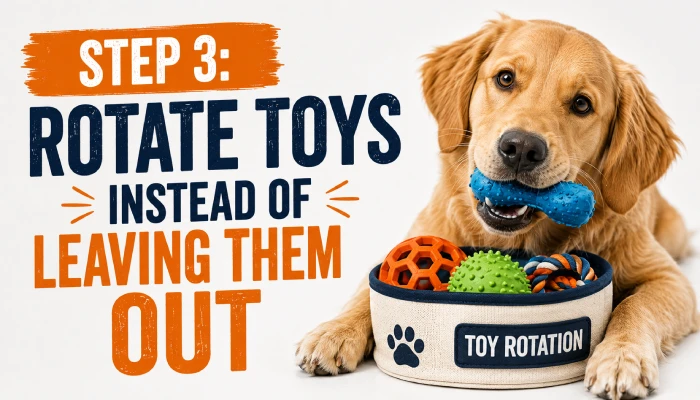
Here’s a simple trick professional trainers use.
Don’t leave every toy on the floor.
Instead:
- Keep only 2–3 toys available.
- Store the rest.
- Rotate every few days.
Dogs become bored when they see the same toys every day.
Rotating toys keeps them exciting without spending extra money.
This simple habit also reduces destructive behaviour caused by boredom.
Step 4: Use Toys That Challenge the Brain
Chewing isn’t always about chewing.
Sometimes it’s about needing mental stimulation.
Interactive toys:
- Keep dogs occupied longer
- Reduce anxiety
- Prevent boredom
- Burn mental energy
- Slow destructive habits
Many behavioural problems improve simply because the dog has something productive to focus on.
If your dog regularly destroys toys because they’re bored, consider adding mentally enriching activities alongside durable chew toys.
One excellent option is BarkBox, which delivers new toys, enrichment activities, and engaging surprises each month. The variety helps prevent boredom while encouraging healthier play habits.
👉 Learn more about BarkBox here:
https://dogcareandtraining.com/bark-box
Step 5: Supervise New Toys
Never assume a toy is completely indestructible.
Even the toughest products eventually wear down.
Always inspect toys for:
- Cracks
- Missing chunks
- Loose pieces
- Sharp edges
Discard damaged toys immediately.
Regular inspections greatly reduce choking risks.
Step 6: Reward Good Chewing Habits
Dogs repeat behaviours that get rewarded.
Whenever your dog chooses an appropriate chew toy instead of your shoes or furniture:
- Offer praise
- Give treats
- Play together
- Reinforce the behaviour immediately
Positive reinforcement teaches your dog exactly what you want.
Training is always more effective than punishment.
Step 7: Address the Root Cause of Destructive Chewing
Sometimes the problem isn’t the toy.
It’s the behaviour.
If your dog destroys every toy within minutes, chews furniture, digs through rubbish, or ignores commands, the chewing may be a symptom of a larger behavioural issue.
This is where structured training makes the biggest difference.
Instead of constantly replacing destroyed toys, teaching your dog self-control creates lasting change.
Common Mistakes Owners Make
Buying the Cheapest Toy
Cheap toys often become expensive because you replace them constantly. Quality usually saves money over time.
Assuming More Toys Solve the Problem
Ten poor-quality toys won’t outperform one durable enrichment toy. Focus on quality instead of quantity. Ignoring Mental Exercise Physical exercise alone isn’t enough. Dogs need to think.
Without mental stimulation, many dogs invent their own entertainment—which often means chewing your belongings.
The Complete Solution: Pair Durable Toys with Behaviour Training
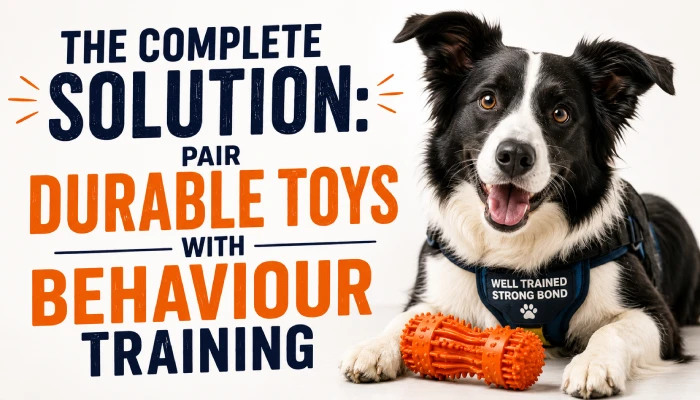
The best dog toys help satisfy your dog’s natural urge to chew. But if your dog is chewing because of boredom, frustration, anxiety, or poor impulse control, toys alone won’t completely solve the issue. That’s why many experienced dog owners combine durable toys with structured behaviour training.
One of the most comprehensive programmes available is Brain Training for Dogs:
https://dogcareandtraining.com/brain-training
Created by certified professional dog trainer Adrienne Farricelli, this step-by-step training programme focuses on teaching dogs how to think, make better choices, and develop lasting habits. Rather than relying on punishment or quick fixes, it uses positive reinforcement methods that work with how dogs naturally learn.
Many owners use the programme to improve behaviours such as:
- Destructive chewing
- Excessive barking
- Biting
- Pulling on the lead
- Ignoring commands
- Hyperactivity
- Poor focus
When combined with durable chew toys, the training helps address both the physical need to chew and the behavioural reasons behind destructive habits.
Benefits of Brain Training for Dogs 💕
- Step-by-step lessons suitable for beginners
- Positive reinforcement methods
- Helps reduce destructive chewing
- Improves listening skills
- Builds stronger communication between you and your dog
- Provides fun mental stimulation
- Suitable for puppies and adult dogs
- Helps prevent boredom-related behaviour
- Easy to follow from home
- Encourages long-term behavioural improvement instead of temporary fixes
If your dog constantly destroys toys despite trying different products, behaviour training may be the missing piece.
Additional Products That Can Help
Depending on your dog’s needs, these resources may also support better chewing habits:
BarkBox
Provides rotating toys, enrichment activities, and mental stimulation to reduce boredom.
https://dogcareandtraining.com/bark-box
Pawstruck
Reward good chewing choices with high-quality training treats that reinforce positive behaviour.
https://dogcareandtraining.com/pawstruck
Chewy
A convenient place to find durable chew toys, enrichment products, and everyday essentials.
Frequently Asked Questions
What toys last the longest for aggressive chewers?
Heavy-duty natural rubber toys, reinforced nylon chew toys, and durable treat-dispensing toys generally last much longer than plush or thin plastic toys.
Why does my dog destroy every toy?
Destructive chewing is often caused by boredom, excess energy, anxiety, teething, or a lack of mental stimulation—not simply because your dog likes destroying things.
Should I stop my dog from chewing?
No. Chewing is a healthy, natural behaviour.
Instead, redirect your dog toward appropriate chew toys and reward that choice.
Can training reduce destructive chewing?
Yes.
Many dogs chew destructively because they haven’t learned appropriate habits. Structured training combined with suitable chew toys often produces the best long-term results.
Final Thoughts
Finding the right dog toys for aggressive chewers isn’t just about buying the toughest product on the market.
It’s about understanding why your dog chews in the first place.
Choose durable toys designed for power chewers, rotate them regularly, provide plenty of mental stimulation, and reward appropriate chewing behaviour. These simple strategies can dramatically reduce destructive habits while keeping your dog happier and healthier.
If your dog continues destroying toys, furniture, or household items despite your best efforts, consider addressing the behaviour itself—not just the chewing. The Brain Training for Dogs programme offers a practical, positive approach to building better habits that last.
Combined with enriching options like BarkBox, appropriate rewards from Pawstruck, and reliable supplies from Chewy, you’ll have a well-rounded strategy that supports both your dog’s natural instincts and your peace of mind.
Small changes today can lead to a calmer, more focused, and happier companion tomorrow.