
If your dog is chewing your furniture, you’re probably feeling frustrated, stressed, and maybe even a little defeated.
You walk into the room and see torn cushions, scratched table legs, or chunks missing from your couch—and it feels like no matter what you try, nothing works.
Here’s the truth most people don’t tell you: dog chewing furniture is completely fixable—but only if you approach it the right way.
Your dog isn’t being stubborn or trying to annoy you. Chewing is a natural behavior. The problem is simply that it’s being directed at the wrong things.
In this guide, you’ll learn exactly how to stop dog chewing furniture step-by-step, even if your dog has been doing it for months.
Why Dogs Chew Furniture (Understanding the Root Cause)
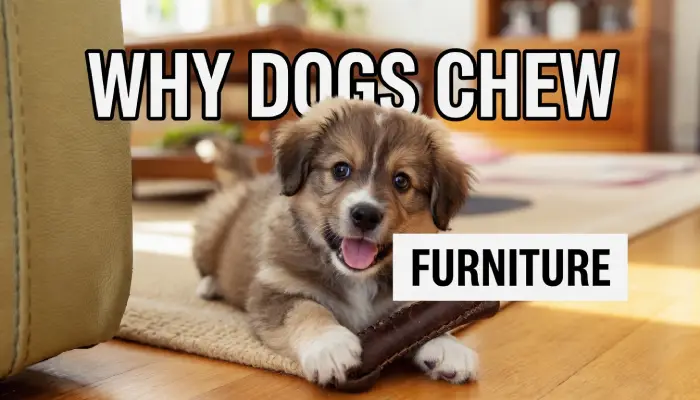
Before you try to fix the behavior, you need to understand why it’s happening.
Every chewing problem has a cause—and if you don’t address it, the behavior will keep coming back.
1. Teething (Puppies)
If you have a puppy, chewing is almost guaranteed.
Just like babies, puppies go through a teething phase that causes discomfort in their gums. Chewing helps relieve that pain.
Unfortunately, your furniture often becomes the target.
2. Boredom
Dogs are not designed to sit around all day doing nothing.
If your dog isn’t getting enough mental stimulation, they will find ways to entertain themselves—and chewing is one of the easiest and most rewarding options.
3. Excess Energy
This is especially common in high-energy breeds.
If your dog has pent-up energy, it has to go somewhere. Without proper outlets, that energy often turns into destructive behaviors like chewing furniture.
4. Anxiety or Stress
Some dogs chew because they’re anxious—especially when left alone.
This is known as separation anxiety, and it requires a slightly different approach than standard training.
5. Lack of Training
Many dogs simply don’t know what’s acceptable to chew.
If they’ve never been taught the difference between a toy and a table leg, they’ll treat both the same.
Once you identify which of these applies to your dog, you can start solving the problem effectively.
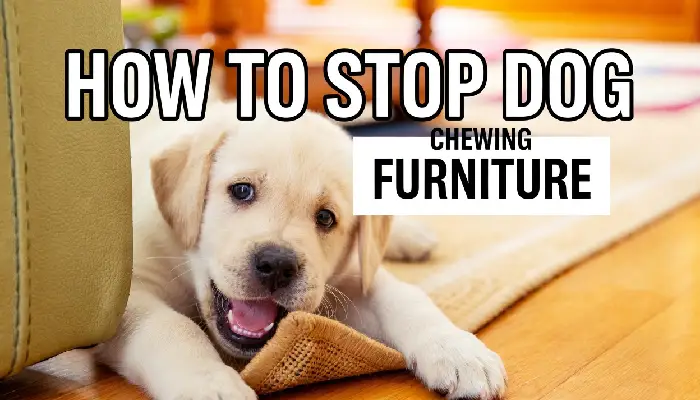
Step 1: Stop the Damage Immediately (Management First)
Before you even begin training, you need to prevent your dog from continuing the behavior.
Why? Because every time your dog chews furniture, the habit gets stronger.
This is where management comes in.
- Use baby gates to block access to certain rooms
- Close doors when you’re not supervising
- Remove or protect high-risk furniture
This step alone can dramatically reduce damage within the first few days.
It doesn’t solve the root problem—but it gives you control while you work on training.
Step 2: Give Your Dog Better Chewing Options
This is one of the most important steps—and one that many dog owners underestimate.
You cannot expect your dog to stop chewing. That’s not realistic.
Instead, you need to redirect the behavior to appropriate items.
If your dog doesn’t have appealing alternatives, your furniture will always win.
Best Product Recommendation
One of the easiest ways to solve this is by upgrading your dog’s toy variety:
- Bark Box – A monthly box filled with engaging chew toys and treats designed to prevent boredom
These toys are specifically designed to keep dogs mentally engaged and reduce destructive habits.
Pro Tip: Rotate toys every few days. When toys feel “new,” your dog is far more likely to choose them over furniture.
Step 3: Make Furniture Less Appealing
Right now, your dog finds your furniture rewarding to chew.
You need to change that.
Using a safe deterrent spray can quickly make furniture unattractive.
Apply it to:
- Couch corners
- Wooden legs
- Chair edges
Dogs dislike bitter tastes. After a few attempts, most will avoid those surfaces entirely.
This works best when combined with providing better alternatives.
Step 4: Increase Physical Exercise
A tired dog is far less likely to chew furniture.
Many destructive behaviors come from excess energy—not bad behavior.
Your dog’s daily routine should include:
- 30–60 minutes of walking
- Active play sessions (fetch, tug-of-war)
- Opportunities to explore new environments
If you have a high-energy breed, you may need even more exercise.
Skipping this step is one of the biggest reasons training fails.
Step 5: Add Mental Stimulation (The Missing Piece)
Here’s something many dog owners overlook:
Mental exercise can be just as important as physical exercise.
Dogs get bored quickly, especially intelligent breeds. When their brain isn’t engaged, they look for stimulation—and chewing becomes their solution.
Best Product Recommendation
One of the most effective ways to stop destructive chewing is structured brain training:
- Brain Training for Dogs – A step-by-step program designed to eliminate bad behaviors through mental stimulation
This system helps reduce boredom, improve focus, and address underlying behavioral issues.
Many dog owners notice faster results when combining mental and physical exercise.
Step 6: Catch and Redirect in Real Time
Timing is everything in dog training.
If you catch your dog chewing furniture:
- Say “No” in a calm but firm tone
- Immediately give them a chew toy
- Praise them when they switch
This teaches your dog what is acceptable—not just what’s wrong.
Avoid yelling or punishment. That creates fear, not understanding.
Step 7: Set Your Dog Up for Success
Training works best when your dog has clear structure.
Create a simple daily routine:
- Exercise at the same time each day
- Scheduled feeding times
- Regular play and training sessions
Dogs thrive on consistency. The more predictable their routine, the fewer behavioral problems you’ll see.
Step 8: Use Crate Training to Prevent Destruction
If your dog is chewing furniture when you’re not home, supervision isn’t possible—and that’s where crate training becomes extremely valuable.
Crate training is not about confinement. When done correctly, it creates a safe, comfortable space where your dog can relax without getting into trouble.
It also prevents your dog from practicing destructive habits while you’re away.
Here’s how to use it effectively:
- Choose the right crate size (enough to stand, turn, and lie down)
- Add comfortable bedding
- Include safe chew toys
- Make the crate a positive environment
Start by introducing the crate slowly. Let your dog explore it voluntarily and reward them for going inside.
Important: Never use the crate as punishment. That will create fear and make the problem worse.
When used correctly, crate training can completely eliminate furniture chewing when you’re not home.
Step 9: Fix Separation Anxiety (If That’s the Cause)
If your dog only chews furniture when you leave, the issue may not be boredom—it may be anxiety.
Dogs with separation anxiety often feel stressed or panicked when left alone, and chewing becomes a coping mechanism.
Look for these signs:
- Chewing near doors or windows
- Excessive barking or whining
- Pacing or restlessness
- Destruction shortly after you leave
This type of chewing requires a different strategy.
You need to gradually teach your dog that being alone is safe.
Start with short absences and slowly increase the time. Avoid making a big deal out of leaving or returning.
For deeper behavioral issues, structured programs can make a huge difference.
One of the most effective options is Brain Training for Dogs, which focuses on reducing anxiety while improving obedience and focus.
This is especially useful for dogs that continue destructive behavior despite exercise and toys.
Step 10: Reinforce Good Behavior Consistently
Many dog owners focus only on stopping bad behavior—but reinforcing good behavior is just as important.
Every time your dog chooses a chew toy instead of furniture, reward them.
This can include:
- Verbal praise
- Treats
- Playtime
Dogs repeat behaviors that get rewarded.
The more you reinforce good choices, the faster the bad habits disappear.
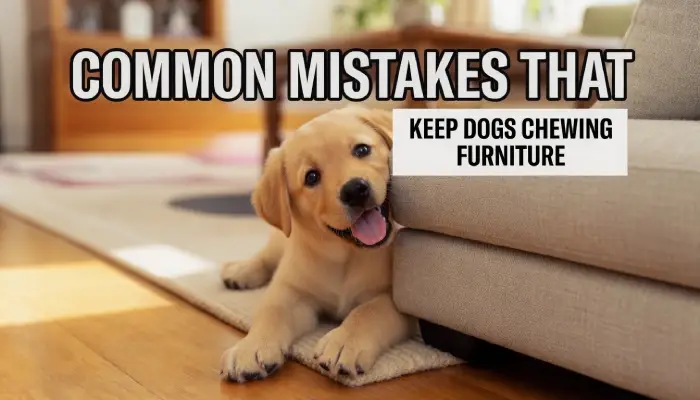
Common Mistakes That Keep Dogs Chewing Furniture
If your dog isn’t improving, one of these mistakes may be the reason.
1. Punishing After the Fact
If you come home and punish your dog for chewing, they won’t understand why.
Dogs live in the moment. Correction only works when it happens immediately.
2. Not Providing Enough Alternatives
If your dog doesn’t have engaging chew toys, your furniture becomes the only option.
This is why toy variety is critical.
Using something like Bark Box ensures your dog always has new, interesting options available.
3. Too Much Freedom Too Soon
Giving your dog full access to the house before they’re trained often leads to repeated mistakes.
Limit freedom until your dog consistently makes good choices.
4. Inconsistent Rules
If one day chewing is ignored and the next day it’s punished, your dog becomes confused.
Consistency is what creates lasting behavior change.
Advanced Strategies for Stubborn Chewers

If your dog continues chewing despite basic training, you may need a more structured approach.
Here are some proven advanced techniques:
Use Long-Lasting Chews
Some dogs need more durable options to stay engaged.
Look for toys designed for aggressive chewers that last longer and provide more satisfaction.
Freeze Toys for Longer Engagement
Stuff chew toys with treats and freeze them.
This increases the time your dog spends focused on the toy instead of your furniture.
Increase Training Sessions
Short, frequent training sessions throughout the day help reinforce good behavior faster.
Even 5–10 minutes at a time can make a big difference.
Limit Unsupervised Time Further
If your dog keeps making mistakes, reduce opportunities for failure.
More supervision = faster learning.
How Long Does It Take to Stop Dog Chewing Furniture?
This depends on your dog’s age, temperament, and consistency of training.
Most dog owners see:
- Noticeable improvement within 7–14 days
- Major behavior change within 3–4 weeks
Dogs with anxiety may take longer—but the behavior is still fixable.
The key is staying consistent every single day.
FAQ: How to Stop Dog Chewing Furniture
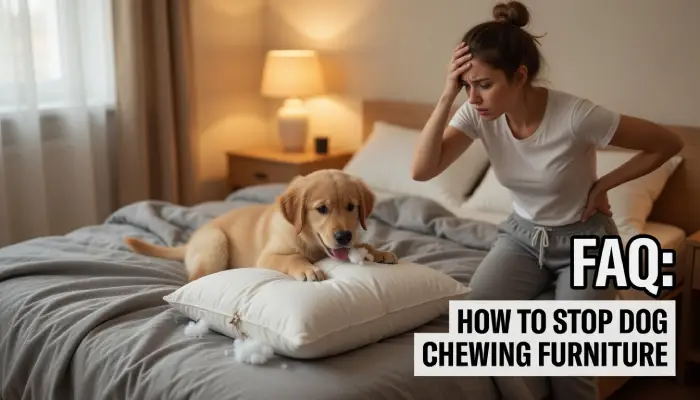
Why does my dog chew furniture even after exercise?
Exercise alone isn’t always enough. Many dogs need mental stimulation as well. Without it, they may still turn to chewing out of boredom.
What age do dogs stop chewing?
Most dogs reduce chewing after the puppy stage, but without proper training, the behavior can continue into adulthood.
Are deterrent sprays safe?
Yes, most commercial sprays are safe when used as directed. They are designed to taste unpleasant but not harm your dog.
Can I completely stop my dog from chewing?
You can’t eliminate chewing entirely—it’s a natural behavior. But you can control what your dog chooses to chew.
Final Thoughts: You Can Fix This Faster Than You Think
Dog chewing furniture can feel overwhelming—but it’s not permanent.
With the right approach, most dogs improve quickly.
Focus on these core principles:
- Manage the environment
- Provide better alternatives
- Increase exercise and stimulation
- Stay consistent with training
When you combine these steps, you’re not just stopping bad behavior—you’re teaching your dog how to make better choices.
Take Action Today (Simple 2-Step Plan)
If you want fast results, start here:
- Upgrade your dog’s toys with Bark Box
- Fix the root behavior using Brain Training for Dogs
These two steps alone solve the majority of chewing problems.
The sooner you start, the sooner your home becomes peaceful again—and your furniture stays intact.