

If you own an intelligent dog, you already know they can be both amazing and exhausting at the same time.
One minute your dog is impressing everyone with how quickly they learn commands. The next minute they are chewing shoes, barking nonstop, stealing socks, or pacing around the house looking for something to do.
That’s because smart dogs need more than just physical exercise. They need mental stimulation too.
Unfortunately, many frustrated dog owners don’t realize this until destructive behaviors start becoming daily problems.
The good news is that the right toys for smart dogs can completely change your dog’s behavior and help restore peace inside your home.
Mental stimulation toys challenge your dog’s brain, reduce boredom, improve focus, and provide healthy outlets for energy. In many cases, enrichment toys can calm dogs down faster than another long walk around the block.
If your dog seems impossible to tire out, this guide will help you discover the best toys for smart dogs, how to use them properly, and why mental stimulation matters more than most owners realize.
Why Smart Dogs Get Bored So Easily
Highly intelligent dogs were originally bred to work alongside humans.
Breeds like Border Collies, Australian Shepherds, German Shepherds, Belgian Malinois, Golden Retrievers, Poodles, and Huskies were designed to solve problems, make decisions, and stay mentally active throughout the day.
When these dogs don’t have enough mental challenges, they often create their own entertainment.
Unfortunately, that entertainment usually involves behaviors owners hate.
Common boredom-related behaviors include:
- Destructive chewing
- Excessive barking
- Digging
- Jumping on guests
- Hyperactivity indoors
- Stealing household objects
- Counter surfing
- Separation anxiety
- Obsessive pacing
This is why simply increasing physical exercise often doesn’t solve the problem.
You can walk a smart dog for an hour and still come home to chaos if their brain never gets properly engaged.
That’s where the best toys for smart dogs become incredibly valuable.
Signs Your Dog Needs More Mental Stimulation
Not sure whether your dog is mentally under-stimulated?
🐶 Here are some clear warning signs:
- Your dog destroys toys quickly
- They constantly seek attention
- They get bored with regular toys fast
- They seem restless indoors
- They become overexcited easily
- They struggle to relax
- They bark at small sounds
- They learn commands extremely quickly
- They create “bad” behaviors when alone
Many frustrated dog owners mistakenly think their dog is stubborn or badly behaved when the real issue is mental boredom.
Adding brain games and enrichment activities can dramatically improve behavior in just a few weeks.
What Makes Good Toys For Smart Dogs?
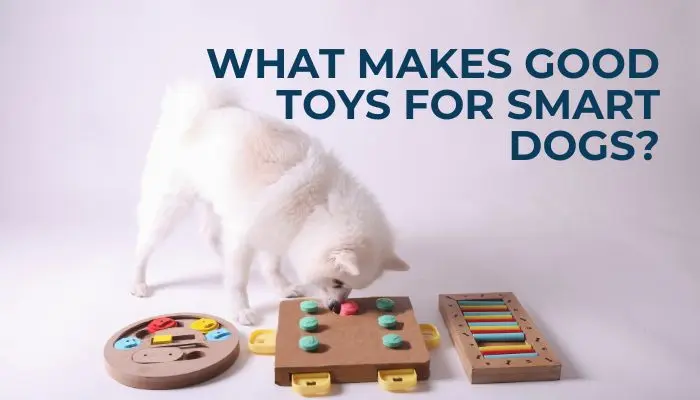
Not every dog toy provides real mental stimulation.
Some toys only distract dogs temporarily without challenging their minds.
The best toys for smart dogs encourage problem-solving and engagement.
Look for toys that include:
- Puzzle-solving
- Hidden rewards
- Scent work
- Interactive play
- Training opportunities
- Movement challenges
- Multiple difficulty levels
The goal is to make your dog think, not just chew.
Mentally stimulating toys help satisfy your dog’s natural instincts while reducing frustration and boredom.
1. Puzzle Toys
Puzzle toys are one of the best investments for intelligent dogs.
These toys force dogs to solve challenges before receiving treats or food rewards.
Some puzzles involve sliding compartments. Others require dogs to lift covers, spin sections, or move pieces into position.
Puzzle toys work especially well for:
- High-energy dogs
- Dogs left home alone
- Fast eaters
- Anxious dogs
- Dogs that destroy furniture
Start with beginner-level puzzles first.
Many owners accidentally buy puzzles that are too difficult, which can frustrate dogs instead of helping them.
As your dog improves, you can gradually increase the challenge level.
2. Snuffle Mats
Snuffle mats are simple but incredibly effective enrichment tools.
These mats allow you to hide treats or kibble between layers of fabric so your dog must search using their nose.
Scent work naturally tires dogs mentally because sniffing requires intense concentration.
In fact, many trainers say 15 minutes of nose work can exhaust a dog more effectively than a long walk.
Snuffle mats are excellent for:
- Rainy days
- Apartment dogs
- Hyperactive dogs
- Senior dogs
- Dogs recovering from injuries
If your dog struggles to settle indoors, scent-based games can make a huge difference.
3. Treat Dispensing Toys
Treat-dispensing toys reward dogs for manipulating the toy correctly.
Dogs must roll, nudge, paw, or bounce the toy to release treats.
These toys encourage independent play while keeping your dog mentally engaged.
Many frustrated owners use treat-dispensing toys during work hours to reduce boredom and destructive behavior.
Frozen versions can provide even longer-lasting entertainment.
You can freeze:
- Peanut butter
- Plain yogurt
- Pumpkin puree
- Wet food
- Soaked kibble
Frozen enrichment toys are especially useful for dogs with separation anxiety.
4. Interactive Tug Toys
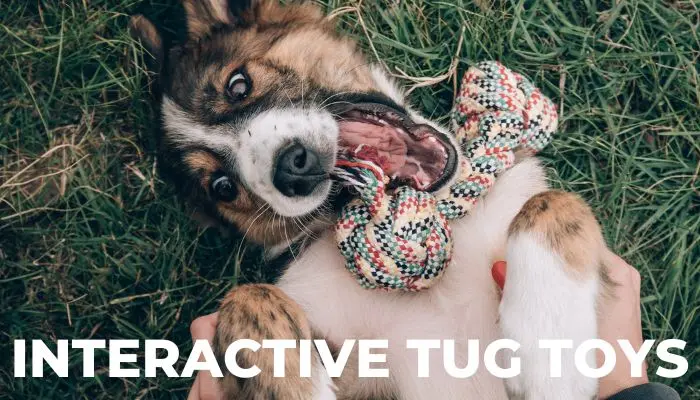
Most people think tug games only provide physical exercise.
But when used correctly, tug can become an excellent mental training activity.
The key is adding structure.
Ask your dog to:
- Sit before playing
- Wait calmly
- Release on command
- Maintain focus during excitement
This builds impulse control and obedience while making playtime more mentally engaging.
Structured tug games also strengthen your relationship with your dog.
5. Hide-And-Seek Toys
Hide-and-seek plush toys encourage dogs to remove smaller toys from larger compartments.
This type of toy activates problem-solving instincts while keeping dogs entertained for longer periods.
These toys work particularly well for curious dogs that enjoy investigating objects and figuring things out.
Rotating hide-and-seek toys regularly helps prevent boredom.
6. Smart Fetch Toys
Some dogs never seem to run out of energy.
Automatic fetch toys can help add mental stimulation to traditional fetch games.
Dogs learn timing, movement patterns, and reward anticipation.
These toys can provide independent exercise and entertainment when owners feel overwhelmed trying to constantly keep up with energetic dogs.
7. Scent Work Games
Dogs naturally experience the world through smell.
That’s why scent games are one of the most effective forms of mental enrichment.
Simple scent games include:
- Hiding treats around the house
- Using scent kits
- Playing “find it”
- Searching for favorite toys
- Tracking scent trails
Scent work helps reduce anxiety, improve confidence, and mentally tire dogs in healthy ways.
Many professional trainers use scent work for reactive or anxious dogs because it encourages calm focus.
8. Rope Toys With Training
Rope toys become much more valuable when combined with obedience training.
Instead of simply allowing chaotic play, use rope toys to teach:
- Focus
- Patience
- Calmness
- Release commands
- Impulse control
This turns a basic toy into a complete mental exercise.
Smart dogs thrive when playtime includes structure and communication.
9. DIY Brain Games
You do not need expensive toys to mentally challenge your dog.
Simple DIY games can work extremely well.
Try:
- Hiding treats under cups
- Building obstacle courses
- Teaching toy names
- Playing shell games
- Practicing new tricks
- Creating scavenger hunts
Short training sessions throughout the day can significantly improve your dog’s behavior and emotional balance.
Consistency matters more than perfection.
10. Training-Based Enrichment
One of the biggest mistakes owners make is relying only on toys.
Toys help, but training provides deeper mental stimulation.
Dogs that regularly learn new tasks tend to become calmer and more focused.
Training also improves communication between you and your dog.
This is why many frustrated owners combine enrichment toys with structured training programs like Brain Training for Dogs.
The program focuses on mental stimulation exercises that help improve:
- Focus
- Listening skills
- Confidence
- Calm behavior
- Impulse control
Many owners notice improvements in destructive behavior once their dogs start receiving consistent mental challenges.
11. Rotating Toys To Prevent Boredom
One major reason dogs lose interest in toys is overexposure.
If every toy stays available all the time, nothing feels exciting anymore.
Instead, rotate toys every few days.
Keep only a few toys available at once.
This simple trick makes old toys feel “new” again and helps maintain your dog’s interest.
Try rotating:
- Puzzle toys
- Tug toys
- Chew toys
- Scent games
- Treat dispensers
Toy rotation keeps mentally stimulating activities fresh and exciting.
Why Smart Dogs Need Training, Not Just Toys

Many frustrated dog owners keep buying more toys hoping behavior problems will disappear.
But smart dogs also need guidance and structure.
Mental stimulation works best when paired with training.
Without training, some dogs become overstimulated instead of calmer.
Structured communication helps dogs understand how to behave appropriately inside the home.
That’s why combining enrichment with training usually creates the best long-term results.
Some owners also use tools like the Halo Collar to reinforce boundaries during outdoor training and walks.
The goal is not punishment.
The goal is clear communication and consistency.
Can Mental Stimulation Reduce Anxiety?
Absolutely.
Many intelligent dogs develop anxiety because they lack proper mental outlets.
Interactive toys and brain games give dogs productive activities instead of allowing nervous energy to build up.
This can help reduce:
- Excessive barking
- Destructive chewing
- Crate anxiety
- Separation stress
- Hyperactivity
- Restlessness
Mental enrichment encourages calmness and emotional balance over time.
Dogs that regularly engage in problem-solving activities often become more relaxed overall.
Monthly Toy Boxes Can Help
Some dogs get bored with the same toys repeatedly.
That’s why many owners enjoy rotating subscription boxes that introduce fresh toys and challenges regularly.
Services like BarkBox provide rotating enrichment toys and treats that help maintain your dog’s interest.
This can be especially useful for dogs that destroy toys quickly or lose interest fast.
New experiences help keep intelligent dogs mentally stimulated.
Daily Routines Matter Too
Toys alone cannot solve every behavior issue.
Dogs thrive on routines and consistency.
A healthy daily routine should include:
- Physical exercise
- Mental enrichment
- Training
- Calm downtime
- Sleep
- Structured feeding schedules
When dogs know what to expect, they often become calmer and easier to manage.
Many owners simplify daily care using products from Pet Care Supplies to stay organized and consistent.
Small improvements in routine can create major behavior changes over time.
Healthy Chewing Can Help Smart Dogs Relax
Chewing is naturally calming for many dogs.
Safe chew options can provide both mental stimulation and stress relief.
Many owners use healthy chews from Pawstruck because long-lasting chews help redirect destructive chewing behaviors in positive ways.
Providing appropriate chewing outlets is especially important for young, energetic dogs.
Common Mistakes Owners Make With Smart Dogs
Even caring dog owners accidentally make mistakes that increase frustration.
The most common issues include:
- Relying only on physical exercise
- Leaving toys out constantly
- Ignoring mental stimulation
- Using toys without structure
- Not teaching calm behavior
- Expecting dogs to entertain themselves all day
- Overstimulating dogs without rest periods
Small daily adjustments often produce the biggest improvements.
How Long Should Mental Stimulation Sessions Last?
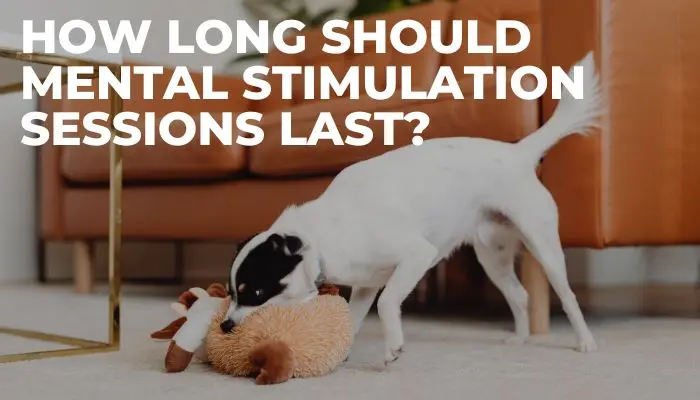
Mental enrichment does not need to last hours.
In fact, short sessions often work best.
For most dogs:
- 10–15 minutes of puzzle work is effective
- 5–10 minute training sessions work well
- 15 minutes of scent work can be exhausting
- Multiple short sessions are better than one long session
Consistency matters more than duration.
Daily enrichment creates stronger results than occasional long activities.
Do Older Dogs Need Mental Stimulation Too?
Absolutely.
Senior dogs benefit enormously from brain games and enrichment.
Mental stimulation helps:
- Reduce boredom
- Improve confidence
- Support cognitive health
- Increase engagement
- Prevent frustration
Just choose lower-impact activities appropriate for your dog’s physical condition.
Gentle scent games and easy puzzles are excellent options for older dogs.
The Right Toys Can Change Your Dog’s Behavior
Living with a highly intelligent dog can feel overwhelming sometimes.
But most smart dogs are not trying to be difficult.
They simply need mental challenges, structure, and healthy outlets for their energy.
The right toys for smart dogs can dramatically reduce boredom, destructive behavior, anxiety, and hyperactivity while helping your dog feel calmer and happier.
Start simple.
Add puzzle toys, scent games, training activities, and interactive enrichment into your dog’s daily routine.
Most importantly, stay consistent.
Even small amounts of daily mental stimulation can create major improvements over time.
If you want a more structured approach to improving your dog’s focus and behavior, many frustrated owners begin with Brain Training for Dogs to combine enrichment with practical step-by-step training.
With the right balance of mental stimulation, training, and consistency, even the most energetic smart dogs can become calmer, more focused companions.