Let’s be honest…
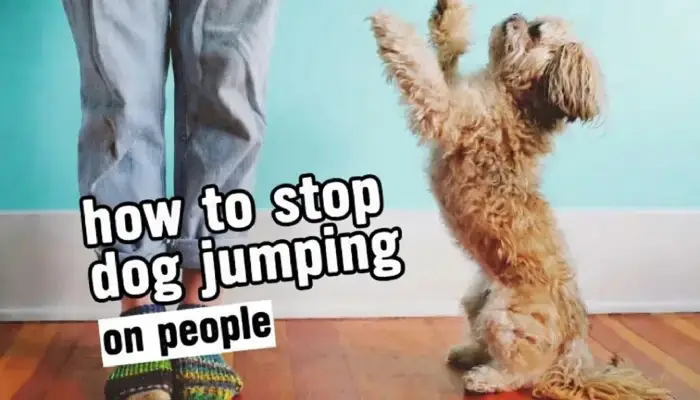
At first, your dog jumping up on people felt cute. A little excitement. A little love.
Now?
It’s embarrassing.
It’s frustrating.
And if your dog is big — it can even be dangerous.
Guests walk in and immediately get pounced on. Clothes get dirty. Kids get knocked over. Some people even become afraid to visit.
And here’s the real kicker…
You’ve probably already tried saying “No!” or pushing your dog away — and it didn’t work.
That’s because jumping isn’t a bad dog problem.
It’s a training gap.
In this guide, I’ll show you exactly how to stop your dog from jumping on people — step-by-step — using simple, effective methods that actually stick.
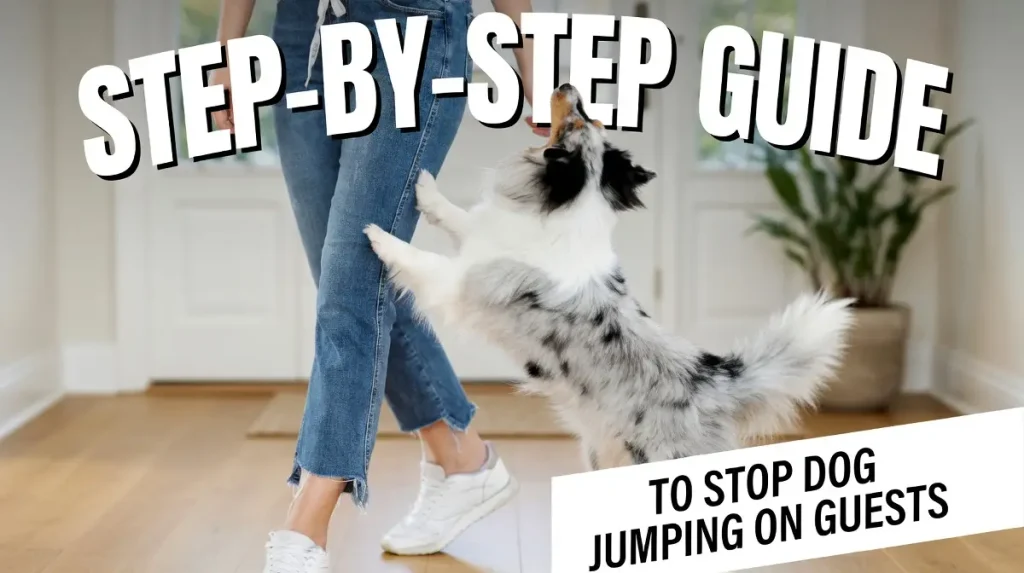
Step-by-Step Guide to Stop Dog Jumping on People
1. Understand Why Dogs Jump
Before you fix the behavior, you need to understand it.
Dogs jump because:
- They want attention
- They’re excited
- They’ve been rewarded for it (even accidentally)
Here’s the truth most people miss:
If your dog is jumping, it’s because it works.
Even yelling, pushing, or laughing still counts as attention — which reinforces the behavior.
2. Remove the Reward (Ignore the Jumping)
This is the foundation.
When your dog jumps:
- Turn your body away
- Avoid eye contact
- Stay silent
- Do NOT touch or talk
You become boring.
The moment your dog’s paws hit the ground…
➡️ Give attention immediately
- Praise calmly
- Pet them
- Speak gently
This teaches:
“Four paws on the floor = attention. Jumping = nothing.”
3. Teach an Alternative Behavior
You don’t just stop a behavior — you replace it.
Train your dog to:
- Sit when greeting people
Steps:
- Approach your dog
- Ask for a sit
- Reward the sit
- Repeat with different people
Soon your dog learns:
👉 “If I sit, I get attention faster.”
And dogs ALWAYS choose the fastest reward.
4. Practice with Controlled Setups
Don’t wait for real-life chaos.
Create training scenarios:
- Have a friend knock on the door
- Keep your dog on a leash
- Practice calm greetings
If your dog jumps:
- Reset immediately
- Try again
Consistency beats intensity every time.
5. Use a Leash for Better Control
A leash isn’t just for walks.
It’s a powerful training tool indoors.
When guests arrive:
- Keep your dog on a leash
- Step on it gently to prevent jumping
- Reward calm behavior
This prevents mistakes and speeds up learning.
6. Reward Calm Energy, Not Excitement
Most people accidentally reward hyper behavior.
Instead:
- Ignore over-excitement
- Reward calmness
Example:
- Dog bouncing around → ignore
- Dog standing quietly → reward
You’re shaping behavior like a pro trainer.
7. Be Consistent (This Is Where Most Fail)
Here’s the brutal truth:
If even ONE person rewards jumping…
You reset your progress.
Everyone in your home must follow the same rules:
- No attention for jumping
- Only reward calm behavior
Consistency isn’t important.
It’s everything.
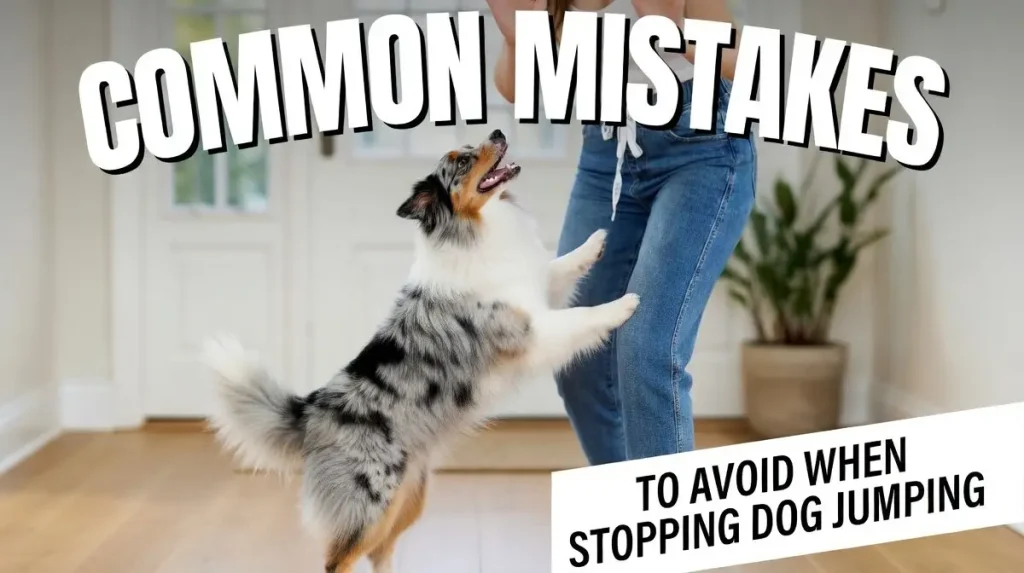
Common Mistakes That Make Jumping Worse
Mistake #1: Pushing the Dog Away
To you, it’s correction.
To your dog?
It’s play.
You’re giving physical interaction — which reinforces jumping.
Mistake #2: Inconsistent Rules
Sometimes you allow jumping…
Sometimes you don’t.
This confuses your dog and makes the behavior stronger.
Dogs thrive on clear patterns.
Mistake #3: Only Training When Guests Arrive
That’s like practicing for a test during the exam.
Training should happen:
- Daily
- In low-distraction environments first
Then gradually build up.
A Smarter, Faster Way to Fix This

If you want to fix jumping faster — and avoid months of trial and error — there’s a smarter way.
One of the most effective programs available is:
What It Is
A complete, step-by-step dog training program that focuses on mental stimulation and behavior correction — not just basic obedience.
Who Created It
It was developed by Adrienne Farricelli, a certified professional dog trainer with years of real-world experience working with difficult behaviors.
Why It Works for Jumping
Here’s what most people don’t realize:
Jumping isn’t just a behavior problem…
It’s often caused by:
- Excess energy
- Lack of mental stimulation
- Poor impulse control
This program targets the root cause.
It teaches your dog:
- Self-control
- Focus
- Calm responses to excitement
Which directly reduces jumping behavior.
Benefits of Brain Training for Dogs
Here’s why so many dog owners swear by it:
- 🧠 Improves your dog’s impulse control
- 🐕 Reduces unwanted behaviors like jumping, barking, and chewing
- 🎯 Provides structured, easy-to-follow training plans
- 🏠 Can be done at home — no expensive trainers needed
- 🐾 Strengthens your bond with your dog
- ⚡ Works for dogs of all ages and breeds
- 📚 Includes step-by-step video demonstrations
It’s not just training…
It’s a complete behavior transformation system.
If you’re tired of your dog jumping on guests…
And you want a clear, proven system to fix it faster…
👉 Check out Brain Training for Dogs here
It’s one of the simplest ways to turn chaos into calm — without frustration.
FAQ: How to Stop Dog Jumping on People

1. Why does my dog jump on guests but not me?
Because guests are more exciting and unpredictable.
Your dog sees them as a higher-value reward.
Training needs to include other people — not just you.
2. How long does it take to stop jumping behavior?
With consistent training:
- Noticeable improvement: 1–2 weeks
- Reliable behavior: 3–6 weeks
Consistency is the key factor.
3. Should I punish my dog for jumping?
No.
Punishment often:
- Confuses your dog
- Increases anxiety
- Makes behavior worse
Focus on rewarding the behavior you want instead.
4. Can older dogs learn to stop jumping?
Absolutely.
Dogs of any age can learn new behaviors with the right training approach.
It’s never too late.
Stopping your dog from jumping on people isn’t about force…
It’s about clarity and consistency.
Here’s what works:
- Remove attention for jumping
- Reward calm behavior
- Teach an alternative (like sitting)
- Practice regularly
- Stay consistent
Do this right, and your dog transforms from chaotic greeter…
Into a calm, well-mannered companion.
And if you want to speed up the process — and fix the root cause of the behavior…
👉 Take a closer look at Brain Training for Dogs
Because a well-trained dog isn’t just easier to manage…
It’s a joy to live with.